You had a great conversation. You talked about your practices, compared notes, and finished your coffee with a promise to stay in touch.
Then you went back to work.
A few weeks later, you’re wondering whether you should be doing more business development. You’ve been meeting people. You’re putting in the time. But you’re not sure where those conversations are going.
Often, two things are missing: a clear ask or next step, and the follow-up to make it happen.
Coffee creates an opportunity. What you do before, during, and after the conversation helps that opportunity go somewhere.
Decide what success would look like
Before you invite someone to meet, think about what you hope the conversation will make possible.
The answer doesn’t have to be “They’ll send me clients.” You might want an introduction, advice about proposing a speaking topic, an opportunity to collaborate, or an invitation to a networking event. You might want someone to share your information with colleagues. Sometimes, the right next step is simply another conversation.
Those are all useful outcomes. Being clear about the outcome you want helps you decide what to ask.
That clarity also helps you choose whom to invite. If you want referrals for a particular kind of matter, consider who encounters those clients but may not handle that work themselves. If you want to speak at more events, think about who participates in the organizations you’d like to reach.
Then consider the relationship. How well do you know this person? What interests or connections do you share? Have they shown an openness to supporting you? What might you be able to offer them?
There is no universal list of people every law firm owner should take to coffee. Your goals should guide where you invest your time.
Be honest about the invitation
I sometimes hear from owners that inviting someone they know socially to coffee to talk about business feels “icky,” like they have an ulterior motive.
It’s understandable. You value the relationship, and you don’t want the person to feel ambushed by a request they weren’t expecting.
That’s a good reason to be clear in your invitation.
“I’d love to catch up and hear how things are going with your practice. Would you be open to talking about how we might support each other’s firms?”
You can find language that feels natural to you and fits the relationship. Being honest about what you have in mind gives the other person a choice—and lets you arrive without worrying about how to reveal the “real” reason you invited them.
Make it easy to say yes, too. Someone who can’t spare the time for lunch may be happy to have a short Zoom conversation. Offering that option gives them a way to help without committing to travel and a longer meeting.
And if the main purpose of the meeting is for them to do you a favor, offer to pay for the coffee or lunch.
Ask for what you actually want
A lot of us struggle to ask for help because we haven’t figured out how to say what we want in a way that feels comfortable.
Consider this:
“Hey, I saw on LinkedIn that you spoke at the Bar Association CLE. It’s a goal of mine to speak at more CLEs this year. Can you tell me how to go about proposing a CLE topic, and would you be open to making an introduction?”
That gives the other person context, explains your goal, and makes a specific request. They can answer it. They can also suggest another route if an introduction isn’t possible.
Compare that with “Keep me in mind if you hear of anything.” The person may sincerely want to help, but you’ve left them to figure out what help would look like.
If someone has agreed to meet with you, there is already some willingness to connect. Give yourself permission to make a thoughtful request. Their willingness to meet doesn’t guarantee a yes, but you can give them something clear to respond to.
If the words feel awkward, practice saying them out loud before the meeting. A few minutes in front of the mirror can help you find language that sounds like you.
And make room for their goals. Ask what they’re working on and whether there is anything you can do to support them. Your offer may look different with a peer, a mentor, or someone newer to practice. You can still ask.
Keep the ball in your court
Suppose your lunch companion says, “Absolutely. I’d be happy to introduce you.”
Your job is to make that introduction easy.
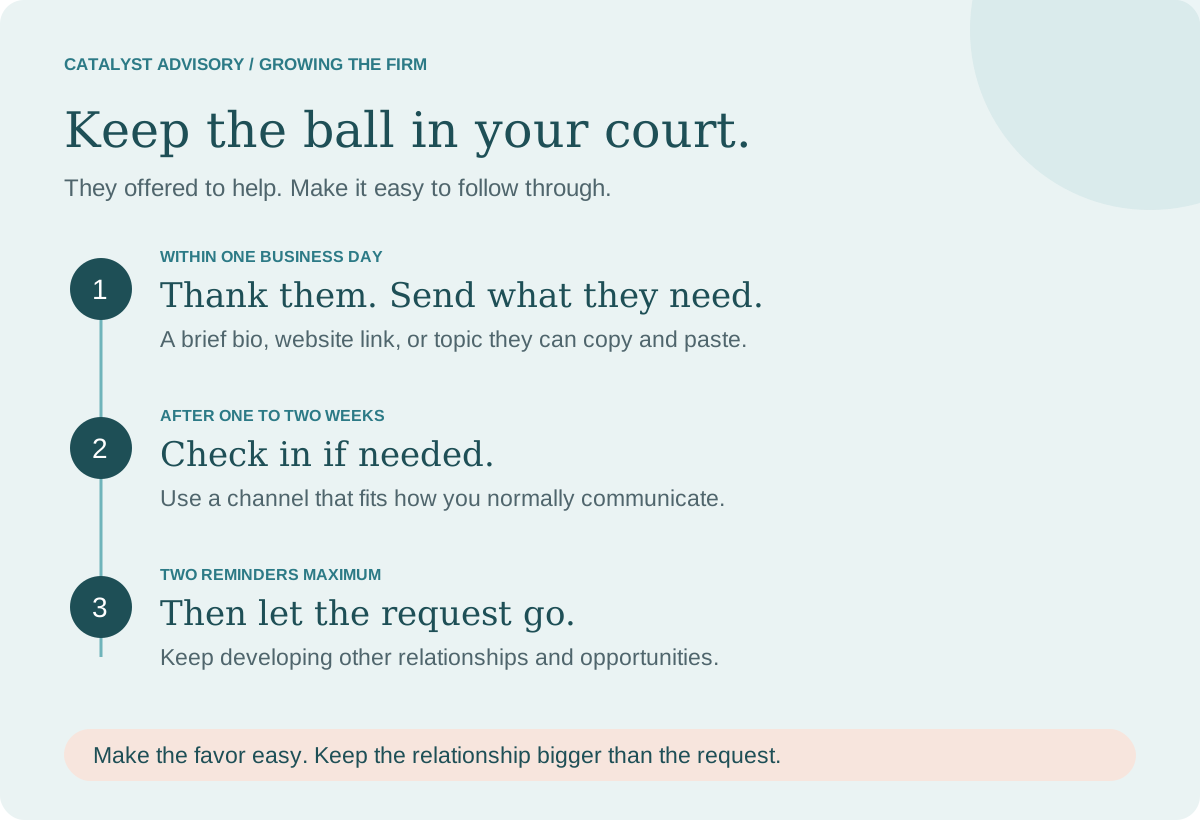
Within 24 hours, or one business day, follow up to thank them for the conversation and for offering to help. Send the information they’ll need: perhaps a website link, a brief bio, or a proposed CLE topic.
Give them something they can copy and paste. They’re doing you a favor; don’t leave them with an assignment to research your background, find your materials, and write your introduction from scratch.
If the introduction doesn’t happen, I generally suggest following up after one to two weeks. Consider how you normally communicate with this person, too. If you usually text, a formal email may disappear into an inbox they rarely get through.
My rule of thumb is a maximum of two follow-up reminders. If it still doesn’t happen, let that particular request go and move on. You can maintain the relationship without continuing to chase the favor.
This is also why it helps to develop several relationships. One person’s availability shouldn’t determine whether your business development moves forward.
Make room for it before you get busy
The most common reason I see this kind of business development fall by the wayside is capacity. Things get busy, client work takes priority, and networking feels discretionary. Coffee is easy to postpone when there’s a deadline to meet.
Before long, months have passed without reaching out to anyone.
Set a target that fits your schedule. Two purposeful coffees, lunches, or other networking conversations a month may feel manageable. Put time on your calendar for reaching out, meeting, and following up. If you have to cancel, reschedule while you’re thinking about it.
Relationship building can take months or years to produce business. A conversation that doesn’t lead to an immediate referral can still be worthwhile.
Still, patience works best with occasional reflection. Every quarter or six months, look at your approach:
- Are you inviting the right people for your goals? Consider whether they encounter the clients, organizations, or opportunities you want to reach.
- How are you making the ask? If you fumble or leave your request vague, practice your introduction and ask out loud.
- Is your follow-up reaching them and making action easy? Check both the communication channel and the information you provide.
You may need more time. You may also need to adjust something you can control.
Start with your next conversation
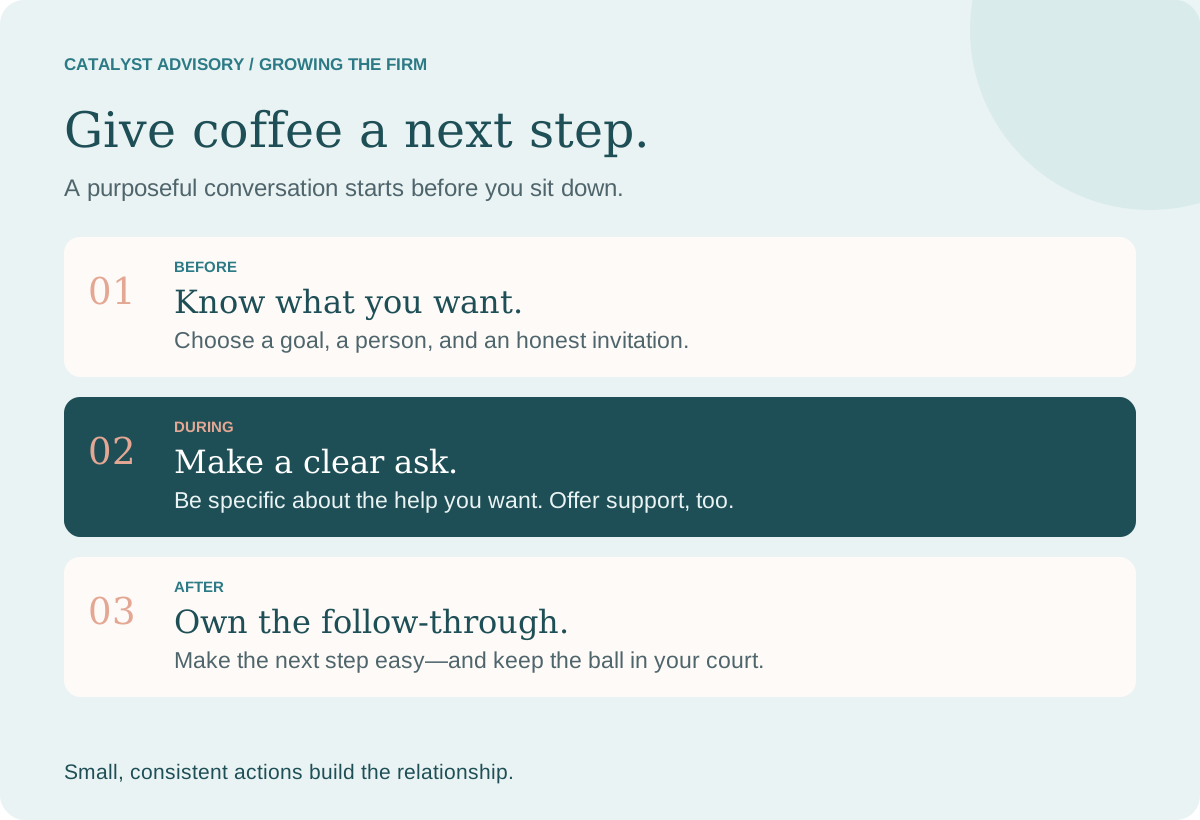
Before your next networking conversation, answer three questions: Why this person? What would make the conversation successful? What do I want to ask?
During the conversation, learn what they’re working toward and offer support. Afterward, take responsibility for the next step.
You don’t need to fill your calendar with coffee dates. Start with a few thoughtful conversations—and follow through on what you hoped they would make possible.